Rhubarb Is Here!

Strawberry Rhubarb Pie

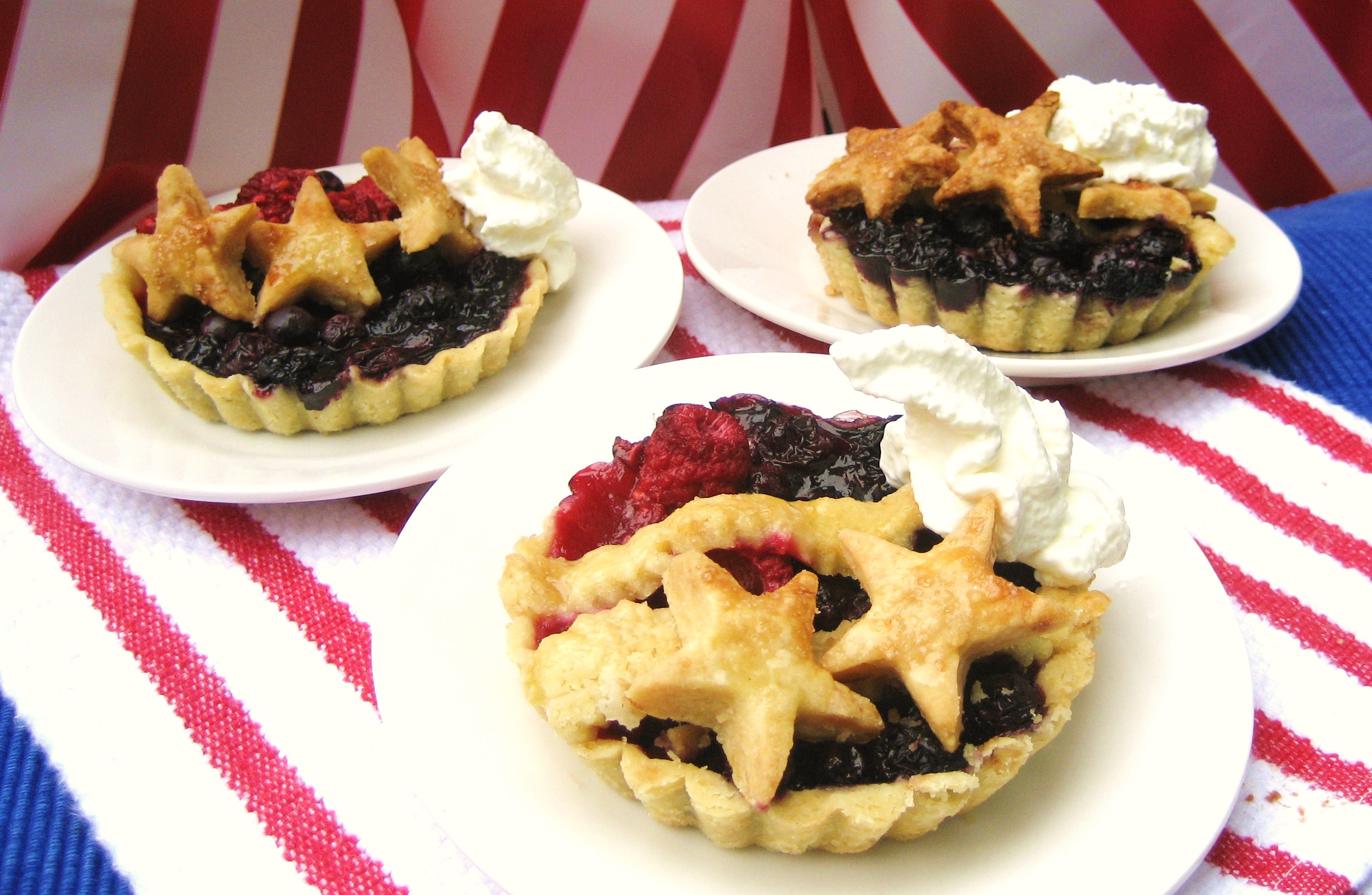
When I see bins of bright pink spears of rhubarb and baskets of scarlet strawberries, I must sweep them up and make a pie.  I don’t know who first paired the flavors of strawberries and rhubarb, but it is a most compatible marriage.  The combination of sweet and tart works again and again.  If I had to name my favorite pie, this one would be in the forefront along with my “unsinkable apple pie”.

Ingredients

Two recipes for the pie dough in my peerless pumpkin pie recipe.(See Pages in right sidebar).  Refrigerate at least ½ hour.

4 cups fresh rhubarb, cleaned and sliced into ½ pieces

3 cups fresh strawberries, cleaned, hulled, and cut into 1-inch chunks

1 ¼ cups sugar

½ t cinnamon

Zest from one orange

4 T instant tapioca

¼ t salt

2 T unsalted butter cut into 1/2 inch cubes

Glaze:

2 T milk

2 T raw sugar

Procedure

Preheat oven to 400 degrees.  Line a 9-inch pie plate with pastry, leaving a ½-inch overhang.  Chill in refrigerator while making the filling.  Combine rhubarb and strawberries in a bowl.  Add sugar, cinnamon, orange zest, tapioca and salt. Shake and combine well to mix dry ingredients with fruit and let stand 15 minutes.

Roll out the top pastry to a 12-inch circle.  Important tip: drain excess liquid from pie filling.*  Pour filling into pastry shell and dot with butter.  Cover with top pastry folding top edge under bottom.  Brush with milk and sprinkle with sugar.  Make three cuts on top of pie to let out steam.  Place pie on an aluminum foil covered cookie sheet and set on shelf in lower third of oven. Bake at 400 degrees for 15 minutes, then lower temperature to 350 for 35 to 40 minutes until crust is golden brown and juices are bubbling up through cuts on top.  Let cool on a rack before serving.

This pie can be made with a lattice crust  See recipe for cherry pie with seasonal tart cherries ( Pages in right sidebar).

*Draining the liquid from the filling will assure a firm, not runny, filling after the pie is baked.

Crank up the BBQ-Grilled Ribeye Steak

A great steak from aged grass-fed beef can’t be beat. It doesn’t need a rub massaged into it to mask the flavor. Its own flavor is sublime. Does Peter Luger use a rub? I think not. Select steaks at least 1 ½ inches thick and nicely marbled. This means a fine marbling of fat throughout, not big pockets of fat and, in no case, totally lean. It’s true that fat carries flavor plus providing more tender meat. I really like Cheryl Smith’s recipe for ribeye. She does include a brief rest for the steak in garlic, olive oil and fresh thyme, but then the garlic and thyme are removed before grilling.

Optional: Serve it with a creamy gorgonzola sauce. Suggested accompaniments are sautéed spinach and shoestring potatoes.
Ingredients:
2 (10-oz.) ribeye steaks from grass-fed beef (preferably aged)
3 cloves garlic, sliced
6 sprigs fresh thyme, crushed
3 T extra virgin olive oil
Kosher salt
Freshly ground black pepper

Procedure:
Place steaks in a dish along with garlic, thyme and olive oil. Turn the steaks over from time to time and allow  to marinate for one hour. Heat a grill to medium high. Remove garlic and thyme and season steaks with salt and pepper. Grill to desired doneness turning only once. Remove from grill and cover with aluminum foil for five minutes before serving.

Gorgonzola Dolce Cream Sauce
Ingredients:
2 T unsalted butter
2 T finely diced onions
1 T fresh thyme leaves
1 T all-purpose flour
1 cup heavy cream
2 T dry sherry
½ to 1 cup gorgonzola dolce cheese
Kosher salt
Freshly ground black pepper
Procedure:
Melt the butter in a small saucepan. Add the onions, thyme and then whisk in the flour. Cook the flour one minute. Add the heavy cream and dry sherry and continue to whisk. Bring the mixture to a simmer. After about 2 minutes of simmering add cheese to melt. Season with salt and pepper. Serve on top of steaks or on the side. Serves 2.

Grilled T-Bone Steak

Photographer Bill Brady http://bit.ly/9wFYxm
Food Stylist Brian Preston Campbell

Quantcast


Possibly related posts: (automatically generated)

Categories: Food Photography · REcipes
Tagged: , , , , , , , , , , , ,

Quick Apricot Preserves

IMG_1139Today’s the day.  They’re in season, but you’ve got to grab them now.  Beautiful velvety apricots!  Make a batch of apricot preserves.  No, we’re not going to fool around with canning equipment.  It’s not going to last long enough to require that.  And there’s no need to peel the apricots.  Here’s all you do:

1 1/2 cups granulated sugar

1/4 cup water

pinch of salt

1/4 cup dried apricots chopped in a medium dice

2 lbs. fresh apricots

2 T fresh lemon juice

2 T Calvados

Place 1 1/2 cups granulated sugar,  1/4 cup water and a pinch of salt  in a Dutch oven and stir over heat until clear. Add dried apricots.  They will add a tartness that will compliment the fresh fruit.   Break open 2 lbs. apricots with your fingers and pop out the pits.  Chop coarsely and add to sugar syrup.  Cook at a rolling boil, stirring often until syrupy and thickened.  This will take about a half hour.  Take off  heat and stir in 2 T  fresh lemon juice and 2 T Calvados.  When cool, ladle into 2 pint-size glass jars with screw-on tops.  Refrigerate.  Will keep for 2-3 weeks.

Photo by sweetpaprika

Crunchy Calamari

If you crave the crunchiest calamari, put the wheat flour aside and think tempura. We’re not talking about anything heavily coated here, but a light golden brown crispy coating using rice flour. Many recipes for fried calamari call for a light dusting of flour.  However, if you want calamari to take on color and crispiness, go for this delicate batter.

Ingredients

4 cups peanut oil

1 lb. cleaned squid, including tentacles*

1 cup rice flour, separated

2 T cornstarch

2 ½ t baking powder

1 ½ t peanut oil

½ salt

1 t sugar

Directions

1. Heat oil in a Dutch oven to 375 degrees.

2. Slice squid bodies into 1/2–inch lengths

3. Make sure tentacles have no hard parts and slice in half lengthwise

4. Shake squid with ½ cup rice flour in a bag to coat.

5. Mix ½ cup rice flour, cornstarch, baking powder, peanut oil, salt and sugar  in a bowl.

6.  Stir in enough water, approximately 1/3 cup, to make a batter slightly thicker than heavy cream.

7. Coat squid with batter, a few pieces at a time, allowing excess to fall off, and lower into hot oil.

8.  As squid browns on one side, gently flip over until golden brown.  This will take only few minutes. Lift out with a slotted spoon and drain on paper towels.

9.  Serve immediately with lemon wedges and perhaps a dipping sauce.

Photographer Bill Brady http://bit.ly/9wFYxm

*If you want to clean your own squid, here’s how to do it:

Hold the squid’s body in one hand and the head with the other and gently pull the head away from the body, taking the milky white intestines with it.

Remove the tentacles from the head by cutting them off just in front of the eyes. Discard the head and separate the tentacles if they are large.

Squeeze out the beak-like mouth from the center of the tentacles and discard it.

*If you want to retain the ink sac, look among the intestines for a very small, pearly white pouch with a slight blue tinge and carefully cut it away.

Reach into the body and pull out the clear, plastic-like quill.

Pull off the two fins from either side of the body pouch. Then pull away the brown, semi-transparent skin from both the body and the fins. Wash out the pouch and body with water. Then dry the squid thoroughly to remove any water.

If you’d like to try something different from the ubiquitous marinara sauce, how about:

Sweet Soy Dipping Sauce

¼ cup sweet soy sauce

¼ t grated fresh ginger

½ t rice wine vinegar

¼ t toasted sesame oil

Dash of Sambal Oelek (optional)

Mix ingredients in a small bowl.  Thin slightly with water.

Tartar Sauce

2 large shallots, finely chopped

2 medium gherkins or cornichons, finely diced

2 T freshly squeezed lemon juice

2 T parsley, finely chopped

1 cup mayonnaise

Salt and pepper to taste

Mix all ingredients and refrigerate until ready to use.

Celebrating James Beard’s Birthday: A Student Remembers

First Impressions

He sat on his high director’s chair overseeing his small class of burgeoning cooks, offering instruction in a relaxed, never dogmatic manner.  He seemed larger than life, 6’ 2” with noticeably large hands and feet.  I watched him knead a ball of dough for two loaves with one hand.  I had been on a waiting list to enroll in his classes for 2 ½ years  and I was intimidated by him not because of any arrogance, but by who he was.  Imagine “the dean of American cookery” and me hanging onto his every word and hoping I wouldn’t do something outrageous like knocking over his large jar of saffron.  His manner was, in fact, quite down-to-earth and he only regaled us with his travels and favorite restaurants when someone asked him.

Classes and instruction

The classes were intensive, meeting every night from 5 ‘til around 10.  We prepared a complete meal. Mr. Beard selected wine and we all sat down in the dining room of his West 12th Street Village townhouse. One evening he brought out of storage in his wine cellar heavy black baking sheets he’d ordered from France.  I still have a set as they are indestructible. I remember as we dined that he didn’t care for coffee, but truly enjoyed good wine.

On the Monday night the class began, we began the making of a glace de viande.  It started with a beef rump roast tied with a string to the handles of a large stockpot of water but not touching the bottom. After a number of additions and five days of continuous simmering, on Friday night we uncovered about a cupful of ambrosial, thick velvety glace de viande.

An Avid Listener

Every night we made a salad to accompany the evening meal.  One night Mr. Beard asked each of us to relate how we made a vinaigrette dressing.  Everyone made it a little differently; some added Dijon mustard, some extra virgin olive oil, others a combination of olive oil and peanut oil.  What so impressed me was that Mr.  Beard, intent on learning something new, was truly listening to each of us.

The Cuisinart Food Processor had just become available and, of course, Mr. Beard had a new toy.  I remember him experimenting with it, seeing for himself what it could do and not do.  It made a mince of meat, he noted, but it couldn’t grind meat.  I got my own and wondered how I ever lived without one.  It made beautiful baby food.

Every cook should have a Clay Triplette

Always present was Mr. Beard’s long time housekeeper and guy Friday, Clay Triplette.  Clay was a cook in his own right, a man of interesting heritage, American Indian, Polish and Irish.  Clay helped out in the kitchen and seemed to enjoy passing on to students his own recipes and those of other teachers who had taught in Beard’s kitchen.  I envied Mr. Beard for his Clay Triplette who whisked away every utensil, bowl or pot that had just been used and promptly washed it and put it away.  I have always thought how much easier cooking would be if I had my own Clay Triplette.

Just an iota of his legacy

Today, May 5, is Mr. Beard’s birthday. I learned a lot from James Beard, including some techniques that one is seldom called upon to use, such as removing the breast meat from a turkey while keeping the skin intact for a “terrine of the farm.”  But it’s nice to know you can do it. Here, however is a more practical recipe he taught me. This is an arranged salad with a big wow factor.  Whisked unexpectedly to the table, this platter will command gasps of breath with accolades to follow.

Composed Salad

Prepare a vinaigrette dressing by mincing 2 cloves of garlic and 2 large shallots in a bowl. Whisk in a tablespoon of Dijon mustard and 1/4 cup of a good red wine vinegar. (We used to use Dessaux Fils, but it may no longer be available. Badia a Coltibuono from Italy, both balanced and piquant, is what I use now.)  After that is thoroughly incorporated, slowly drizzle in ½ cup extra virgin olive oil and ¼ cup peanut oil. Add ¼ teaspoon freshly ground fresh black pepper and 1 teaspoon kosher salt.  Taste and adjust seasoning.

Divide the dressing into the number of ingredients you wish to marinate. Add a different herb to each portion keeping in mind how each will enhance the ingredient.  For example, finely julienned basil for tomato wedges.  Other herbs you might use include oregano, dill, tarragon, mint, savory or chervil.  The idea, of course, is to add a complimentary herb to each ingredient and wind up with a variety of flavors.

The ingredients are innumerable: roasted peppers, cooked asparagus or string beans, chick peas, tomato wedges, sliced cooked beets, avocado , cucumber, hard cooked egg wedges, salami, tuna, white bean salad, to list a few. Six or seven items is probably ideal, arranged on a bed of baby romaine or watercress.  Imported olives, capers, anchovies or caper berries can provide an accent.

The fun part is turning loose your imagination to arrange your platter. You’ll want to juxtapose contrasting colors and artistically design a round, oval, rectangular or square arrangement or whatever suits your fancy. Bask in your accolades and enjoy!

“Physically he was the connoisseur’s connoisseur. He was a giant panda, Santa Claus and the Jolly Green Giant rolled into one. On him, a lean and slender physique would have looked like very bad casting.” Craig Claiborne (on James Beard)


Celebrate Cinco de Mayo with Cochinita Pibil (Slow-Roasted Yucatecan Pork)

Diana Kennedy, whose mission for the last 46 years has been the documentation and preservation of regional Mexican cuisine, observes, “It gets to the point where, once you’ve tasted it, you can’t do without Mexican food.  You hunger for it.”  I agree.

I had the good fortune of studying with her at Peter Kump’s Cooking School in NYC, now the Institute for Culinary Education.  At 88 years of age, she is still living in a remote area of Mexico, hauling dried corn in her rattling truck across the miles to grind into her own savory tortillas.  Her most comprehensive book Oaxaca al Gusto was published in September, 2010.

Cochinita Pibil refers to the famous little pig cooked in a pib, the traditional oven of Yucatan, a pit lined with stones.  Fortunately, a vibrant version can be made in your own oven.  Cochinita Pibil can be served hot with salsa (recipe below) and tortillas, as a taco filling, in sandwiches, panuchos and any preparation calling for flavorful shredded pork.  You need to start this recipe a day in advance, but it is well worth the effort.

Ingredients

1 T annatto seeds

¼ t oregano

12 peppercorns

3 whole allspice

1/4 t toasted cumin seeds

1/8 t hot paprika

3 cloves garlic, peeled

¼ cup Seville orange juice*

¼ cup quality tequila, such as Patron

1 T salt

3 ½ to 4 ½ lb. pork loin roast

2 large pieces of banana leaf**

Directions

Grind the first 6 ingredients in a coffee grinder (used only for spices) to as fine a powder as possible.  Puree in a blender or food processor the garlic, orange juice, tequila and salt.  Add the powdered mixture and blend to a smooth paste.  Score the meat all over and rub the paste over the meat.

Render the banana leaves more flexible either by passing them over a bare flame or placing them briefly in hot water.  Pat dry.  Wrap the meat in them and refrigerate for at least 6 hours or overnight.

Place a rack in the bottom of a Dutch oven and set the wrapped pork on it.  Add ½ cup water and cover the pot with a tight fitting lid.  Cook in a 350 degree oven for 2 ½ hours.  Baste the meat with juices from the bottom of the pot. Continue cooking for another 2 ½ hours until meat is falling apart.

Shred the meat and pour the juices from the pot over it.

*Seville oranges or bitter oranges are not easy to find but can be mail ordered.  A near match for ½ cup is a blend of 1 t finely grated grapefruit rind, 3 T orange juice, 3 T grapefruit juice and 2 T lemon juice. Rice wine vinegar is a good choice for a substitute.

**Fresh banana leaves can be found in the Latin American markets of many cities.  They can also be found frozen. They lend a mildly aromatic flavor to the pork.

Salsa

½ cup finely chopped onion

3 chiles cayenne (or 3 chiles habaneros, seeds and ribs removed, if you can take the heat), finely minced

½ t salt

2/3 cup Seville orange juice*

Mix ingredients together and serve separately to sprinkle on shredded pork.

Inspired by Diana Kennedy and Roberto Rodriguez, Cooking classes

The Mexican You Thought You Knew

by Victor Ribaudo

Mexican food always tasted the same to me.  I was bored with it.  Then I visited Mexico several times and was introduced to authentic Mexican cuisine – a far cry from the fare offered at stateside burrito and taco establishments. I fell in love with it.  But vacations do end and once again I’d be faced with Americanized versions of a cuisine that I eventually gave up on.  That is until I stepped into Jalapeño restaurant in New York City.  That was an aha moment for me.  A rediscovery of the taste traditions of a Mexico I had explored several years ago and with which I became so enamored.  What a joy!

What I love about Jalapeño is the total attention to detail.  Oh, not just the service and the plating, which are exquisite.  I’m talking about the authenticity of the food.  Each and every dish is based on the chef’s family recipes – her grandmother’s to be precise.  And you can taste it in such diverse classics as Pulpo a la Plancha, a sautéed octopus and house-made chorizo appetizer in a delicate wine sauce.  Or Camerones de Mojo de Ajo, a generous entrée of jumbo shrimp in a gorgeous garlic sauce that’s served with white rice and a grilled plantain.  Delectable, I tell you!  Or if you’re really feeling adventurous, you can pre-order a marinated suckling pig roasted to sheer perfection.  Very impressive.  They even elevate the Chile Relleno, one of my favorites, to a new level of culinary art.  Imagine a plump, grilled poblano pepper filled with fresh Mexican cheese, calabacita ragu, mushrooms and pumpkin seeds and placed over a savory tomato sauce.  Not what you’re used to, right?

Now, I know what you’re thinking:  “Why are you tempting me?  I can’t visit Jalapeño because I don’t live in New York.”  Well, true Mexican cuisine is not a mystery to prepare at home.  You can do it easily.  It all starts with an authentic recipe.  I asked Phyllis Kirigin and of course she was more than happy to oblige.  Check out her Cochinita Pibil – or slow roasted Yucatecan Pork – and you’ll see what genuine Mexican cuisine is all about.  I like her succulent pork in a sandwich, but you’ll find lots of ways to enjoy this unforgettable dish.

Like so many successful culinary endeavors, it’s all in the ingredients.  Start out with the freshest and your recipes are half way there.  When it comes to Mexican, one is bombarded with shelf after shelf of jarred sauces and pre-made offerings in supermarkets.  Buyers beware!  They’re not always what I would call bona fide Mexican.  And as Phyllis has said to me countless times, “Why waste your money on that packaged stuff when you can easily prepare the real thing with fresh ingredients for less?”  She’s right.  The end result is always better.  You can find so many of the components that make Mexican what it should be in your supermarket or at local Latino markets.  Fresh chiles, avocados, tomatoes, plantains, cactus – it’s all there.  Dried goods such as beans, rice, pumpkin seeds, spices and unsweetened cocoa are also easy to locate.  Or you can always procure your ingredients online.

So the next time you’re thinking about a quick stop at a roadside joint for fast food Mexican, think again.  Get yourself a good Mexican recipe, pick up some fresh ingredients, and have a fiesta at home.  Or if you’re in New York, check out Jalapeño restaurant (www.jalapenonyc.com).  It’s located two blocks from my apartment.  Give me a day or two advanced notice, and I’ll meet you there.  Buen provecho!

Photographer Bill Brady
Written by Victor Ribaudo
Recipe by Phyllis Kirigin, aka sweetpaprika
Food Stylist BrianPreston Campbell
Blog syndicated at the datingsymbol.com

Quick Vegetable Tofu Stir-fry

A Colorful Assortment of Vegetables for a Light Stir-fry

A quick stir-fry can be made with just a few well chosen vegetables.  Put together a colorful combination and always start with a hot wok. Heat a little oil almost to the smoking point. Add the ingredients one at a time starting in the order of the cooking time required.  The stir-frying should take around 6 minutes from beginning to end.  Vegetables should remain crisp.

Ingredients (Serves 2 as a side dish)

I red sweet pepper, cut into ¼-inch slices

1 yellow sweet pepper, cut into ¼-inch slices

¼ lb. snow peas, strings removed

1 head baby bok choy, cut into bite-sized pieces

2 pieces firm tofu, cut in half horizontally, then cut into ½-inch cubes

2 T peanut oil

1 T dry sherry

2 T soy sauce

½ t sugar

¼ cup chicken broth (or water)

Directions

1. Add oil to a hot wok.

2. Add both sweet pepper slices and stir fry for 1 minute.

3.  Add snow peas and stir fry for 30 seconds

4. Add bok choy pieces and stir fry another 30 seconds.

5. Add tofu and gently fold in.

6. Add the sherry, soy sauce and sugar one at a time.

7. When bubbling, add chicken broth and cover.  Turn heat to medium and cook for 3 to 4 minutes. Serve over rice.

Photographer Bill Brady

Selecting and Seasoning a Wok

Wok with black patina that develops with use
(photo by sweetpaprika)

Good news:  the best wok, the carbon steel, sometimes called a rolled steel,  also happens to be the least expensive.  Carbon steel will rust so you have to season it and take proper care of it.  However, it is light weight, will take on a black patina over time and nothing will stick to it.  Cast iron is too heavy to maneuver and will interact with acetic ingredients.  Stainless steel, also heavy, will be more expensive.  An electric wok is out of the question as you cannot take food quickly off the heat or manipulate the wok.

Carbon steel is the way to go.  A new wok may be covered with machine oil which must be washed off with detergent and a plastic scrubber or brush.  Never use steel wool on a wok.  Dry the wok and place it on a top burner until the entire surface is hot.  Douse a wad of a rolled up piece of paper towel with peanut (or vegetable) oil and using tongs, wipe the entire surface.  Heat for 10 minutes.  Let cool.  With clean paper towels, wipe out wok.  Repeat this process two more times.

The first couple of times you use a wok, there may be a slight metallic taste, but this will soon wear off. After each use, wash with hot water and detergent and dry thoroughly.  At the beginning, rub with oil again.  After a short while this will not be necessary and in time you will have a beautiful shiny black wok on which nothing will stick.

I prefer a metal spatula for stir frying.  Wooden spatulas quickly discolor and don’t slide cleanly under the food. Happy woking!

Food Photography for Everyone

More Digital Food Photography, written by my super-talented teammate, Bill Brady, is coming out on May 9.  Bill is a food photographer extraordinaire. He has combined his passion for food and photography to become a highly accomplished food and drink photographer.

Here’s what Bill has to say about his new book: The original title Digital Food Photography was written by one of my competitors around 6 years ago. When I was asked to author the second edition I jumped at the opportunity. After the contract was signed I struggled to give shape to the central point. Shooting food professionally is one thing but distilling the method down so that people could understand it is another. As my good friend Mark Giovannini once said, “Pretend like I was from Mars and just landed in my spaceship, how would you explain it to me so I can understand it easily.”


I kept asking myself who is this book for? Finally it occurred to me it should be for anyone that wants to shoot food photography regardless of their level. I decided to break it up into simple ideas that could easily be understood.

What I arrived at was a step by step process that teaches photography using food as its subject. My thesis is that in order to take outstanding food photos you must learn photography in general. Its concepts, rules and techniques. There are certain skills you have to learn to take any type of photograph but then to capture food images you need to learn the tricks of the trade so to speak.

I learned through experience and on the job training. I wanted to be able to convey the basics then build lessons for more complex studio images. The book became somewhat of a challenge but once I started it shaped up nicely.

The book is available on Amazon for pre-order and is coming out May 9th. <http://www.amazon.com/MORE-Digital-Food-Photography-Brady/dp/1435454189/ref=sr_1_1?ie=UTF8&qid=1333462428&sr=8-1>

I would urge you to consider buying it if you ever wanted to elevate your own images to a more professional level. We discuss everything from simple lighting with natural light to shooting in the commercial environment. We also discuss the business of photography, how to deal with clients and how to bid on jobs.

The book is for you the readers of my blog who strive to make your food images better. There are tips on food styling, ways to collaborate with other food people to get a more professional result.

When I first started out, there were no guide books or blueprints into the professional photography world let alone into the high stakes food photography genre.

Here is the final photo from the food styling chapter where we detail how to style this dish.

Previous Older Entries

Follow

Get every new post delivered to your Inbox.

Join 29 other followers